CAUTO Global:Why Chinese Electric Vehicles Are Gaining Popularity in Uruguay in 2026?
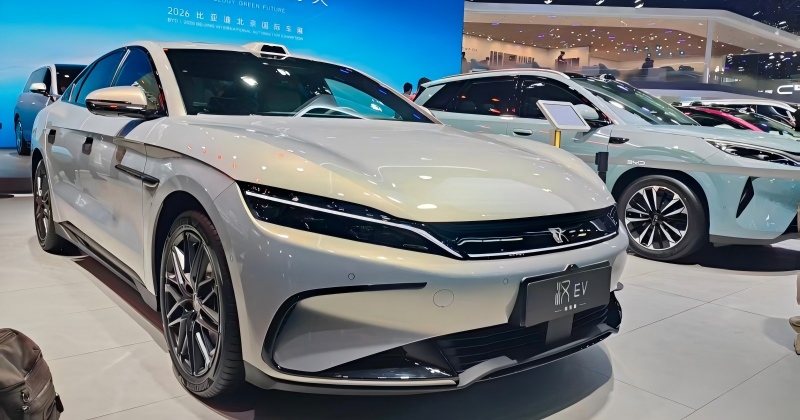
Uruguay is becoming one of the most interesting electric vehicle markets in Latin America, and Chinese electric vehicles are playing a major role in this transformation.
In 2026, Chinese EV brands are no longer a niche choice for Uruguay buyers. They are becoming increasingly visible across passenger cars, SUVs, and commercial vehicles, offering competitive pricing, modern technology, attractive designs, and a growing range of models.
For Uruguay dealers, importers, fleet operators, and business buyers, this creates new opportunities to source electric vehicles directly from reliable Chinese suppliers.
Uruguay’s EV Market Is Growing Rapidly
The growth of electric mobility in Uruguay has become increasingly visible in 2026.
According to local automotive market data, battery-electric vehicles represented approximately 29% of light-vehicle registrations in March 2026, while electrified vehicles—including BEVs, hybrids, mild hybrids, and plug-in hybrids—represented 43.8% of the market.
The trend continued during the year.
In July 2026, Uruguay recorded 6,561 light-vehicle sales. BYD was the best-selling brand with 737 units, ahead of several established international brands. Chinese electric models also performed strongly in the passenger-car segment, including the Dongfeng Nammi, Geely EX2, JMEV EV3, and BYD Seagull.
These figures demonstrate an important change:
Chinese electric vehicles are moving from an emerging segment into the mainstream automotive market in Uruguay.
1. Competitive Prices Make Chinese EVs Attractive
One of the biggest reasons Chinese electric cars are gaining popularity in Uruguay is their competitive price-to-value ratio.
Chinese EV manufacturers have invested heavily in battery technology, electric powertrains, vehicle platforms, and large-scale manufacturing. This allows them to offer vehicles with modern specifications at competitive prices.
For an importer or dealer, the purchase price is only one part of the calculation. A successful EV product should also offer:
- Competitive energy consumption
- Reliable battery technology
- Attractive warranty conditions
- Good equipment levels
- Affordable maintenance
- Strong resale potential
- Suitable specifications for the local market
Chinese EV manufacturers increasingly compete on the entire package rather than simply on price.
2. Chinese EV Technology Has Improved Significantly
The perception of Chinese electric vehicles has changed considerably over the past several years.
Modern Chinese EVs can offer technologies such as:
- Advanced lithium-ion battery systems
- Battery management systems
- Fast-charging capability
- Advanced driver-assistance systems
- Large infotainment displays
- Connected vehicle functions
- Energy-efficient electric motors
- Modern vehicle platforms
Battery technology is particularly important.
Leading Chinese manufacturers have developed large-scale battery production capabilities and have introduced technologies designed to improve safety, energy density, durability, and charging performance.
For Uruguay importers, this means Chinese EVs can increasingly be evaluated on technical specifications and total operating costs rather than simply country of origin.
3. A Wider Range of EV Models Is Available
Another advantage of sourcing electric vehicles from China is the enormous range of available models.
Chinese manufacturers produce EVs across multiple segments, including:
- Small city cars
- Compact hatchbacks
- Sedans
- SUVs
- Premium SUVs
- Electric MPVs
- Pickup trucks
- Commercial vans
- Light-duty electric vehicles
This is particularly useful for Uruguay dealers because different customers have different requirements.
A compact EV such as the BYD Seagull can target urban drivers looking for an affordable electric city car, while larger SUVs can serve families and customers looking for more space.
The growing number of Chinese brands also gives importers more opportunities to develop differentiated product portfolios.
4. Chinese EV Brands Are Already Gaining Market Recognition
The success of Chinese brands in Uruguay is no longer theoretical.
BYD is a particularly strong example.
During the first quarter of 2026, BYD sold 2,117 vehicles in Uruguay and accounted for approximately 40% of the country’s electric-vehicle segment according to reported local market data. The BYD Yuan Pro and Seagull were among the company’s strongest-performing models.
BYD also led Uruguay’s passenger-car market during the first half of 2026, with 2,059 units sold between January and June.
However, BYD is not the only Chinese brand gaining attention.
Uruguay’s market includes a growing selection of Chinese manufacturers and brands, including:
- BYD
- Geely
- Chery
- GAC
- Dongfeng
- JMC
- GWM
- MG
- OMODA
- JAECOO
- Deepal
- Leapmotor
This expanding brand landscape gives local importers more choices when developing their EV portfolios.
5. Chinese EVs Are Suitable for Different Business Models
Chinese electric vehicles are not only relevant to individual consumers.
They can also be attractive for:
Automotive Dealers
Dealers can introduce competitively priced EV models and target customers who want lower running costs and modern technology.
Vehicle Distributors
Distributors can establish long-term relationships with Chinese manufacturers and develop regional sales networks.
Fleet Operators
Electric cars and commercial EVs can be considered for fleets where predictable daily mileage makes operating-cost savings particularly relevant.
Car Rental Companies
Compact electric vehicles can be suitable for urban rental operations when charging infrastructure and operating routes are properly planned.
Corporate Fleets
Businesses may consider EVs as part of fleet modernization and sustainability programs.
For these customers, working with an experienced China EV supplier can simplify vehicle sourcing, specifications, export documentation, logistics, and after-sales coordination.
6. Lower Running Costs Can Improve Total Cost of Ownership
Purchase price is important, but professional vehicle buyers should also consider total cost of ownership.
Electric vehicles generally have fewer mechanical components than conventional internal-combustion vehicles. They do not require traditional engine oil changes, and their electric drivetrains can reduce certain maintenance requirements.
For high-mileage fleets, energy and maintenance costs can have a significant impact on long-term operating economics.
However, actual savings depend on:
- Electricity prices
- Fuel prices
- Annual mileage
- Charging method
- Vehicle efficiency
- Maintenance costs
- Battery warranty
- Driving conditions
Therefore, Uruguay importers should compare the total cost of ownership, rather than looking only at the initial vehicle price.
7. Chinese EVs Offer Opportunities for Uruguay Importers
The growth of Chinese EVs creates opportunities for companies that want to enter or expand within Uruguay’s electric mobility market.
A professional importer should evaluate several factors before selecting a supplier:
Product Availability
Does the supplier provide the models and configurations required for Uruguay?
Export Experience
Has the supplier handled international vehicle exports before?
Vehicle Specifications
Are the vehicle specifications, charging systems, safety equipment, and configurations appropriate for the target market?
Documentation
Can the supplier provide complete commercial and export documentation?
Parts and After-Sales Support
Can spare parts and technical support be arranged for long-term operations?
Logistics
Can vehicles be shipped efficiently from China to Uruguay?
Supply Capacity
Can the supplier maintain stable availability when order volumes increase?
These factors are often more important than simply finding the lowest FOB price.
8. Why Work With a Professional China EV Supplier?
Buying directly from China can provide access to a much larger vehicle selection and potentially competitive wholesale pricing.
However, international vehicle procurement involves more than placing an order.
A professional sourcing and export partner can help with:
- Vehicle selection
- Supplier verification
- Wholesale quotations
- Vehicle specifications
- Export documentation
- Quality inspection
- Shipping coordination
- Spare parts
- CKD/SKD projects
- Dealer and distributor sourcing
CAUTO Global works with international automotive buyers seeking Chinese vehicles and can help Uruguay importers evaluate suitable Chinese EV sourcing solutions based on their target market and business model.
For B2B buyers, the objective should not simply be to find a cheap electric car from China. The objective is to establish a reliable supply chain that can support long-term sales and after-sales operations.
9. What Should Uruguay Buyers Look for When Importing Chinese EVs?
Before purchasing Chinese electric vehicles, Uruguay buyers should consider the following checklist:
- Vehicle segment – city car, sedan, SUV, van, or commercial vehicle.
- Battery type and capacity – evaluate range, charging requirements, and warranty.
- Charging compatibility – confirm that the vehicle configuration is suitable for the intended market.
- Safety specifications – review safety equipment and certification requirements.
- Warranty – understand battery and vehicle warranty terms.
- Spare parts – confirm parts availability and supply channels.
- Export documentation – ensure that the supplier can provide complete documentation.
- Shipping costs – calculate the total landed cost rather than only the FOB price.
- After-sales support – determine how technical issues will be handled.
- Long-term supply – confirm whether the supplier can support repeat orders.
This approach helps importers reduce procurement risks and build a more sustainable EV business.
10. The Future of Chinese EVs in Uruguay
The evidence from 2026 suggests that Chinese electric vehicles are becoming an important part of Uruguay’s automotive market.
BYD’s strong performance, combined with the growing presence of Geely, Dongfeng, JMC, GAC, Chery, GWM, MG, and other Chinese brands, indicates that competition in the electric vehicle segment is becoming increasingly diverse.
For Uruguay, this development can mean more choice for consumers and more opportunities for dealers and distributors.
For Chinese manufacturers and exporters, Uruguay represents a promising market for electric passenger cars, SUVs, commercial EVs, and potentially CKD/SKD projects.
As the market develops, successful importers will likely focus not only on vehicle price, but also on product quality, supply stability, technical support, spare parts, financing, logistics, and long-term brand development.
Conclusion: Are Chinese EVs a Good Opportunity for Uruguay?
Yes. The rapid growth of electric vehicles and the strong performance of Chinese brands make China an increasingly important sourcing market for Uruguay.
Competitive pricing, advanced technology, a wide model selection, and growing market acceptance are some of the key reasons Chinese electric vehicles are gaining popularity in Uruguay in 2026.
For Uruguay dealers, distributors, fleet operators, and other B2B buyers, the next step is to identify the right models and work with a reliable Chinese EV supplier.
CAUTO Global can support international buyers looking for Chinese electric vehicles, automotive sourcing, export services, and customized B2B supply solutions.
If you are a Uruguay importer or dealer looking for Chinese EVs, the right sourcing strategy can help you select suitable models, control landed costs, and build a reliable long-term supply chain.
Frequently Asked Questions
1. Why are Chinese electric vehicles becoming popular in Uruguay?
Chinese EVs are gaining popularity because they offer competitive pricing, modern technology, a wide range of models, and increasingly strong market recognition. In 2026, several Chinese EV models ranked among Uruguay’s best-selling passenger vehicles.
2. Which Chinese EV brands are popular in Uruguay?
BYD is currently one of the strongest Chinese brands in Uruguay. Other Chinese brands with a growing presence include Geely, Chery, GAC, Dongfeng, JMC, GWM, MG, OMODA, JAECOO, Deepal, and Leapmotor.
3. Can I import electric cars from China to Uruguay?
Yes, international buyers can source vehicles from Chinese manufacturers and exporters, but importers should verify Uruguay’s applicable vehicle regulations, documentation requirements, taxes, certification requirements, and customs procedures before placing an order.
4. What should I consider when choosing a Chinese EV supplier?
Uruguay importers should evaluate supplier reliability, export experience, vehicle specifications, pricing, quality control, documentation, warranty, spare-parts support, logistics, and long-term supply capacity.
5. Can CAUTO Global -Uruguay channel supply Chinese EVs to Uruguay?
CAUTO Global Uruguay provides Chinese automotive sourcing and export solutions for international B2B buyers. Uruguay dealers and importers can contact CAUTO Global to discuss available EV models, wholesale supply, export services, and customized sourcing requirements.
Final Takeaway
Chinese electric vehicles are no longer an emerging alternative in Uruguay—they are becoming an important part of the country’s automotive market.
For importers and distributors, 2026 is an important time to evaluate Chinese EV brands, compare models, and establish reliable supply relationships for the growing Uruguayan electric mobility market.